Abbott FreeStyle Libre CGM In-Vivo Test
Background As a long-time practitioner of "self-cultivation (zuo) of life (yao)" — a self-styled amateur expert — I have always been devoted to individual healt
Background
As a long-time practitioner of "self-cultivation (zuo) of life (yao)" — a self-styled amateur expert — I have always been devoted to individual health with endless enthusiasm, and have even fantasized about single-handedly pushing the overall leap in human lifespan and achieving a long-term cooperation and harmony between our species and nature. Sounds a bit like "hyper-convergence," doesn't it? It does look like, with the right method, even the legendary skills like the Star-Sucking Method and the Nine Yin and Nine Yang could be practiced by everyone. Of course, hyper-convergence in the IT world is a remarkable concept. Why remarkable? Because a flower that blooms in the cloud is, after all, not of this mortal world. It seems like it can do anything, and yet it seems like it can do nothing well. The PPT presenters say it can do everything brilliantly, but the moment it touches any real business-critical workload, suddenly it can do nothing. Wait, didn't we say hyper-convergence — how did we end up at Xinchuang (domestic substitution)🤫? This science-minded dreamer of mine just loves words like "leap" and "great leap forward" — terms that sound very IBM but are, in practice, very Huawei. What? You think I'm dissing Huawei's "Great Leap Forward"? Not at all — I just mean these big companies have, through the tides of the times, stockpiled a sizable reserve of "people" and "money" for the country and the nation. With such national pillars backing us up, we can surely be more forceful in the way we wag our tongues and denounce things behind a three-inch microphone.
I had originally meant to talk about the background of glucose meters, but somehow the conversation slipped into national affairs. People of our generation have our own way of loving the country — to borrow a teacher's words, the deeper the love, the sharper the pain. When I was young, I thought we had to be pure to the point of not tolerating a single grain of sand in our eyes. That was until I ran nmon on our own QinOS 1.0 and discovered the system was pushing us a whole desert. Throughout history, the great figures who have tried to upgrade this OS — pioneers like Dr. Sun Yat-sen — have at most patched it up again and again. Sometimes you have to admit: for a system itself, upgrading isn't hard; what's hard is the tangle of sub-systems hanging off it or derived from it. Pull one hair, and the whole body moves; one part damaged, and everything is damaged. As for our "Dream-of-the-Red-Chamber-like" system, the many things that cannot be done are not because the passionate have lost their ideals, but because the indifferent seem to be born indifferent — and those born indifferent are precisely us, the ordinary masses who, generation after generation, with our mortal bodies, pave the road up the mountain and reach the peak of history. Even a small device like this is sharp as a needle that draws blood — who would have thought that even a humble Abbott could cast such a long shadow on the times and the realm.
Appearance (Photo Warning)
Package Contents
- Sensor
- Injector
- Instruction manual
Illustration
Unopened
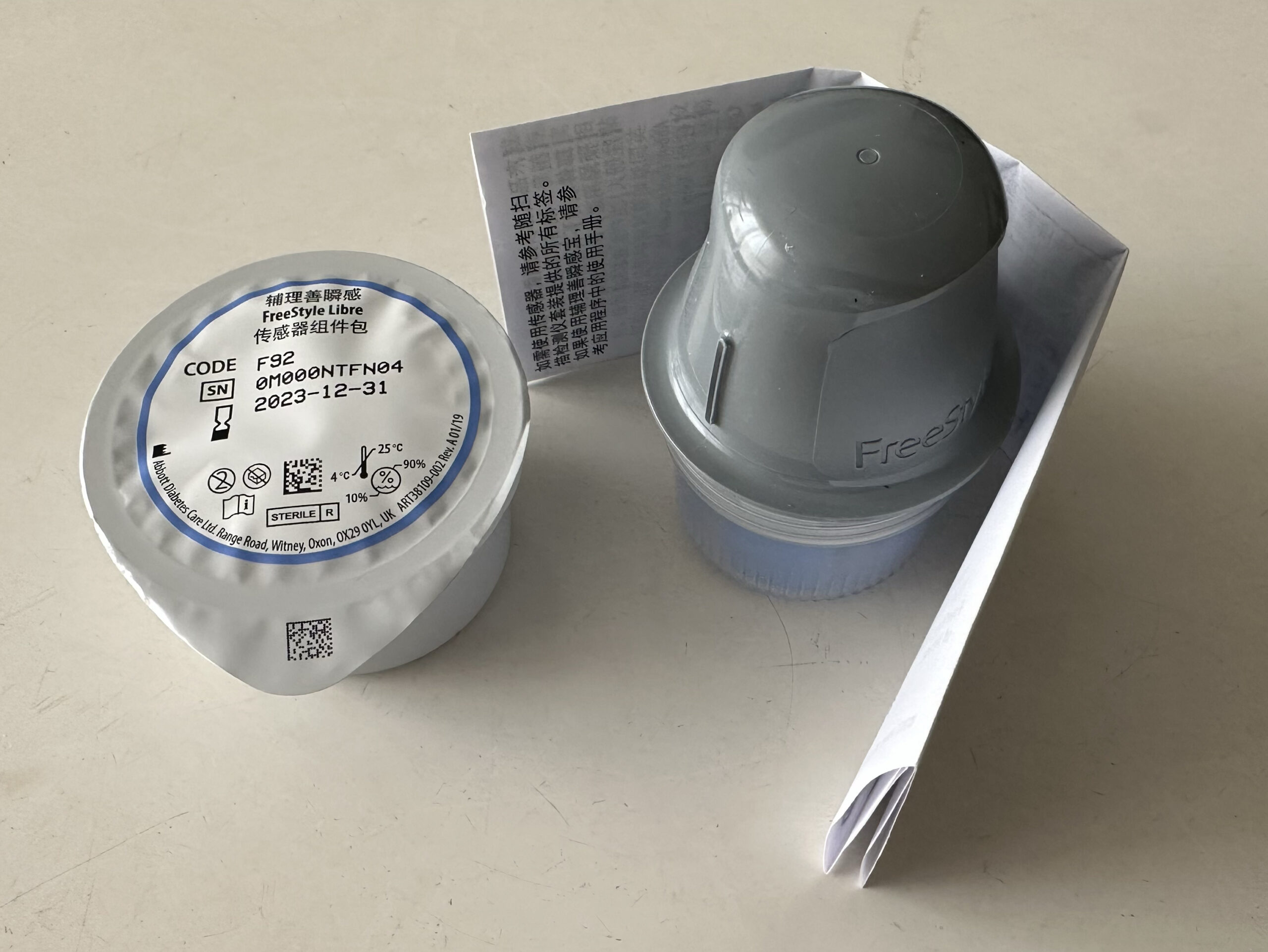
After opening: the syringe (bottom) and the sensor kit (top)
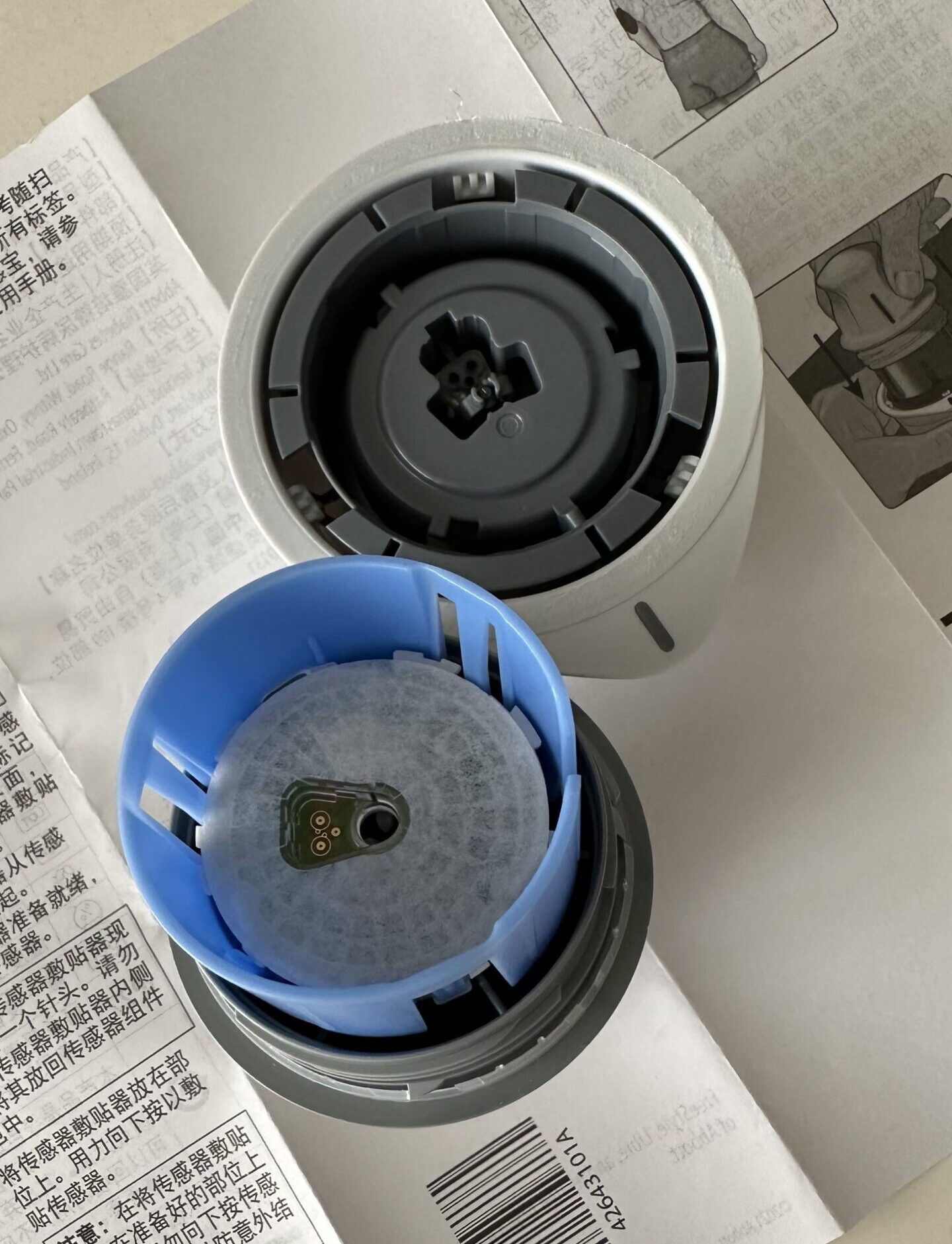
The syringe after winding (final state before injection)
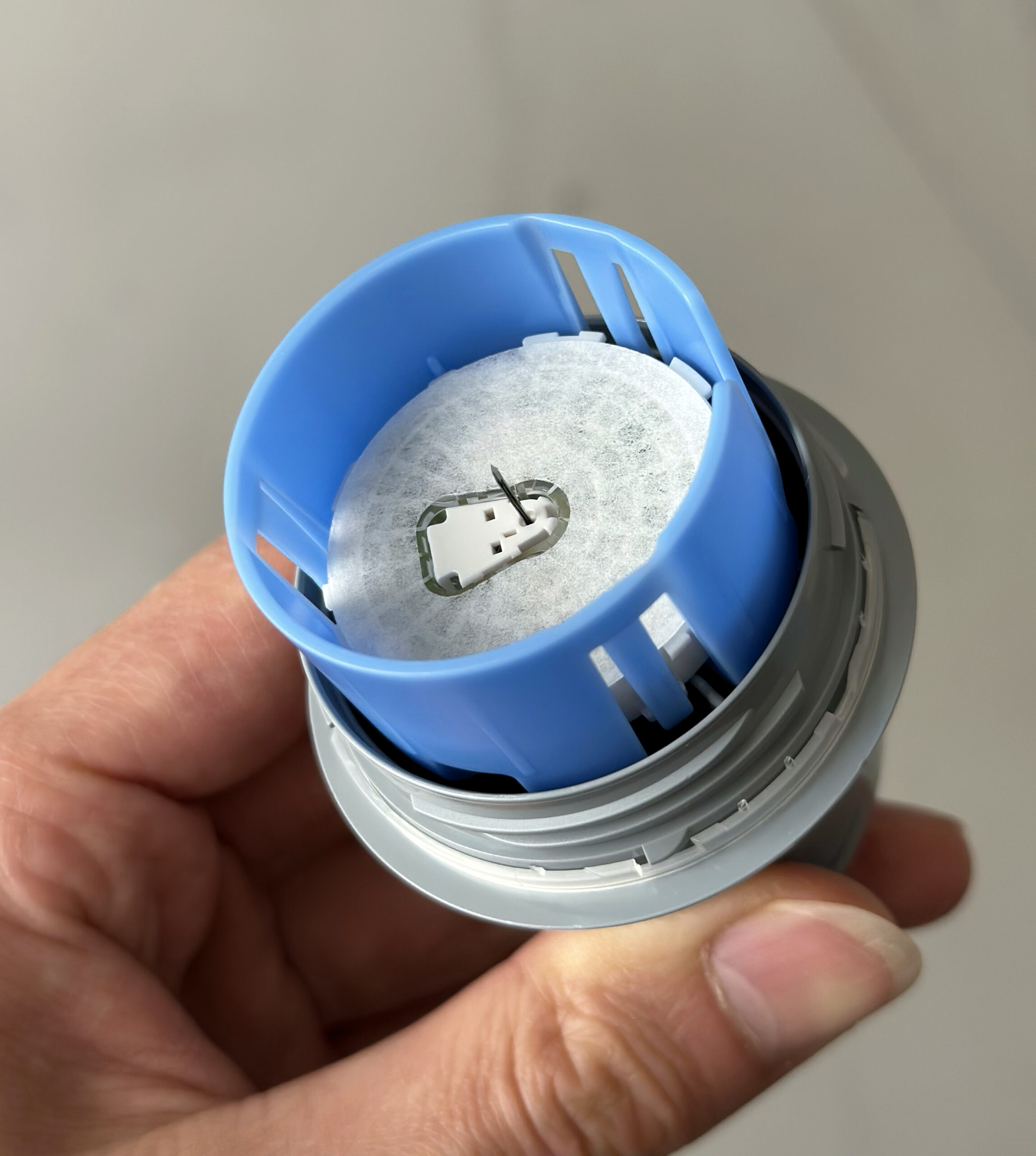
Usage
The manual has a detailed introduction, no need for additional video tutorials or other aids.
About the Injection Site
As of when I remember, the only officially approved area is the inner side of the upper arm, also known as the batwing area. Because a probe needs to be implanted under the skin, if it's an area without fat (like the forearm—this example may not be appropriate, as there seem to be many burly sufferers, my apologies), the sensor shifting during daily life will cause a stinging pain, as if being scratched.
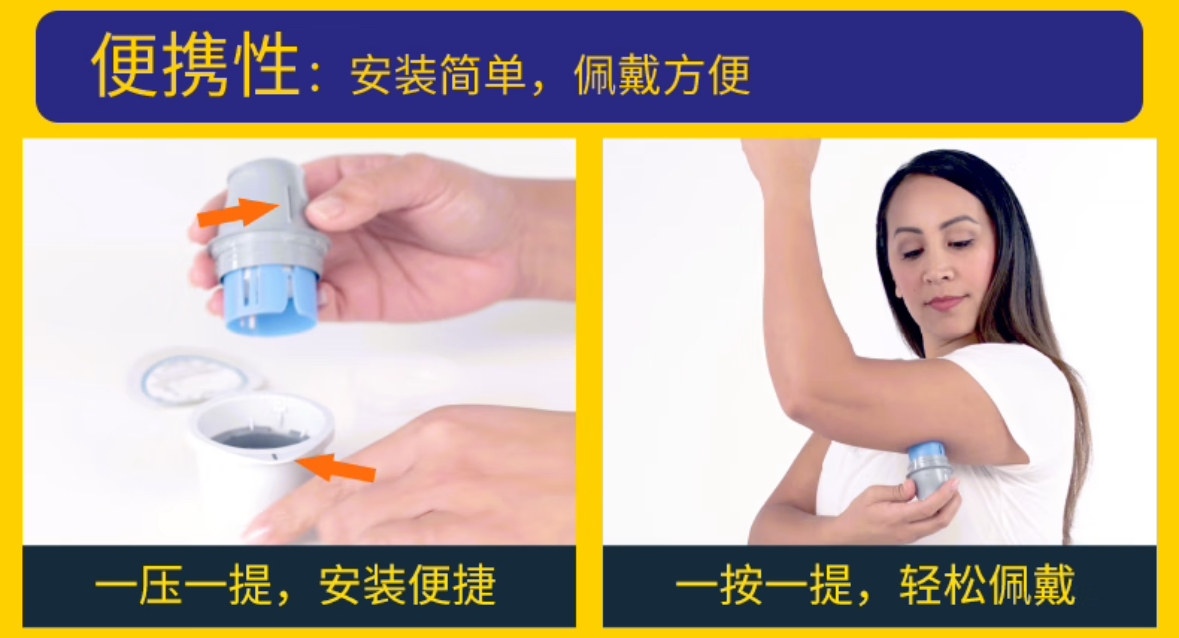
(Screenshot from a JD.com product page; please contact me to remove if infringing.)
QA Highlights (Human Curiosity Lies Below)
Q1: Does the injection hurt? A2: You've had IV drips before, right? It's about that level. Until you're mentally prepared, I'd suggest not getting curious about how long the steel needle inside the injector actually is.
Q2: Will there be inflammation or other symptoms during the injection period?
A2: There will be a foreign-body sensation, persisting throughout the 14-day effective period. This is not a big issue, but if you have a need for cycling, after being jolted there will be a stinging pain (at the end of the article I'll show a picture of the sensor after removal, and the answer to this question will become clear at a glance), and if it's pressed while sleeping there is also a pain. I reckon to have a truly sensation-free experience, we'd have to wait for the subcutaneous approach to be reinvented. As for whether there will be inflammation, I think it depends on the body — for someone with a "True Warrior" body like me, or a "Supreme Yang" body like yours, there's no issue. Going back to question 1, skinny people with slightly fatter arms have an advantage (skinny people who are also a bit fat might not even be able to reach their own bat-wing fat; please fat friends message me privately to tell me this worry is unwarranted) — after all, it's a subcutaneous injection, and a thicker layer of fat means less sensation.
Q3: How is the data managed? A3: There's a dedicated app you can download, or you can buy a simple reader device. If your phone has NFC, you can use the app to scan the data (though I hear the standalone device gives nicer curves). Note: If you plan to use both the dedicated device and the phone app to read data, make sure to first activate the sensor by scanning with the device, and only then bind it via the phone app. Any other order will cause the sensor to be bound only to the phone, and the dedicated device will not be able to connect.
Q4: Can it sync with health platforms? A4: Apple Health doesn't allow it — apps can only read data and manually add data points. If you want trend charts, you have to use the native software or a dedicated device (some third-party apps do offer sync, but it's a paid VIP feature — the price works out to about half a sensor per year). Android wasn't tested, so it isn't covered here. I think it samples every 5 minutes, or maybe 3; the phone scan simply pulls the data off the sensor. As long as the sensor has no issues, the curve is continuous — there's no situation where sampling is forgotten.
Q5: Any other issues during use? A5: If the injection is not placed correctly (the technique is hard to mess up—one press is the whole operation), it can cause the sensor's subcutaneous suction tube (yes, you read that right, this thing has a small tube inserted into the flesh) to bend, and you may not be able to get data. The same can happen if it's been forcibly pulled out of place. But think about why the validity period is only 14 days—I guess a big data analysis concluded that the probability of this happening is lowest within 14 days. That said, Abbott's after-sales is also pretty good—if you have a problem, contact customer service; after a "big-company-like" process, the replacement rate is very high.
Q6: After the injection, will the sensor fall off or will there be continuous bleeding? Unless you are the type whose bleeding simply won't stop, you will hardly see any bleeding. After the injection, the customer service representative will suggest pressing around the edge of the sensor to ensure the adhesive sticks firmly to the skin. That said, adhesiveness and easy removal tend to be inversely related. In other words, when removing the sensor after its expiration date, you'll need to pull it a bit harder. Yes, the same kind of force used for, well, "stretching eggs."
Why a Continuously-Monitored Glucose Meter Is Needed
When it comes to why people use a new thing, there are usually two reasons: first, it's recommended or popularized by others with overlapping lifestyles; second, curiosity. Most people only know that low blood sugar can cause dizziness, but don't realize that high blood sugar can also cause dizziness—and not just high blood pressure. Glucose tolerance and resistance, Type I and Type II, are also not well understood by the general public. We use various apps and devices to monitor important body metrics not because we are noble enough to contribute to medicine and big data, nor because we are so bored that we force ourselves into irrelevant statistics, but to discover abnormalities and habits through trends and comparisons.
The reason humans live longer than most creatures (except for those stubborn tortoises) is, importantly, due to the steady progress of medicine year by year — not to a metaphysical emphasis on going with the flow (though that, too, is carefree in its own way). Science has its own logic, and philosophy has its own predicaments.
In the end, between you and me, though separated by a stretch of heaven and earth, we are already in two different worlds.
The used sensor (the image is disturbing, scroll with caution)


评论Comments
加载中…Loading…
留下评论Leave a comment